

If you own a short-term rental in Scottsdale, you already know something the rest of the country is catching up to: this desert city has become one of the most sought-after second home markets in America. The climate, the golf courses, the resort culture, and a steady stream of visitors have combined to make Scottsdale a magnet for second home buyers and vacation rental investors alike.
But owning a Scottsdale short-term rental and running one profitably are two very different things. If you’re heading into the slower summer months wondering whether your current management setup is actually working for you, this is the perfect time to take a hard look. Below, we break down exactly why Scottsdale continues to draw second home buyers, what that means for STR owners, and how the right management partner can turn a slow season into a planning advantage.
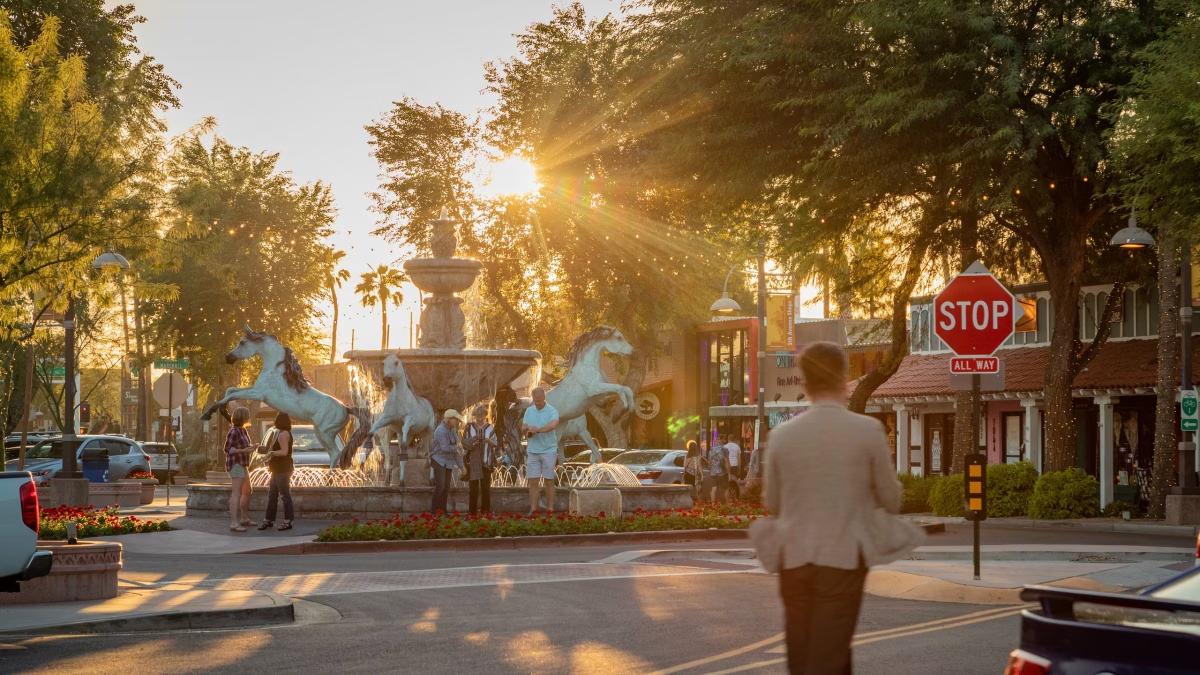
Scottsdale’s Second Home Appeal, By the Numbers
Scottsdale’s pull as a second home destination isn’t just a feeling among locals. It shows up clearly in the data.
Tourism keeps growing, year after year. Scottsdale welcomed more than 11.6 million visitors in 2024, the most recent full-year figures available from the city’s annual tourism study, generating an estimated $2.4 billion in direct visitor spending and $3.7 billion in total economic impact once multiplier effects are factored in. That activity supported roughly 36,000 local jobs and generated $75.8 million in tax revenue, outpacing the cost of municipal services by $22.8 million. The visitor mix included 4.9 million domestic overnight travelers and 1.7 million international overnight visitors, both up meaningfully from the year before.
Cash buyers and second home buyers dominate the market. An estimated 30-35% of Scottsdale home sales are cash transactions, a figure well above the national average, driven largely by retirees, seasonal residents, and second home buyers whose purchasing decisions have little to do with mortgage rate swings. North Scottsdale zip codes like 85255, 85262, and 85266 continue to absorb the bulk of this luxury and second-home demand.
The snowbird economy is enormous. Arizona’s winter visitor population, heavily weighted toward Canadian snowbirds, generates well over a billion dollars in direct seasonal spending annually, much of it concentrated in Scottsdale and the surrounding Valley. Many of these seasonal residents own property here, and a growing share of them use short-term rental income to offset ownership costs during the months they’re not in town.
Inventory is opening up, which is good news for buyers. Scottsdale’s housing supply has grown roughly 29%year-over-year, with the median home price sitting around $954,000 to $980,000 as of mid-2026. That loosening inventory is creating fresh opportunities for second home buyers who were priced out or outbid during the tighter markets of recent years.
Put simply, the demand fundamentals that make Scottsdale a great place to own a second home, tourism, climate, limited land, luxury amenities, are the same fundamentals that make it a strong short-term rental market.
What This Means If You Own an STR in Scottsdale
Scottsdale’s short-term rental market runs on a predictable rhythm: a hard winter high season driven by snowbirds, golf events, and spring training, followed by a much quieter summer stretch. Early 2026 data put occupancy around 51.4% and average daily rate near $333, but those numbers move dramatically depending on the time of year.
That seasonality is exactly why summer is the smartest time to evaluate your management setup. You’re not scrambling to protect peak bookings. You have room to make a change, review your pricing strategy, and walk into the next winter season with a plan instead of playing catch-up.
A few things worth asking yourself right now:
- Is your current manager optimizing your rate calendar for the winter surge, or reacting to it after the fact?
- Are you confident your property is fully compliant with Scottsdale’s short-term rental ordinances, including the city’s annual licensing requirement, neighbor notification rules, and the $500,000 minimum liability insurance mandate under City Ordinance 4566?
- Is slow season being used to get ahead on maintenance, deep cleaning, and furnishings, or is your property sitting stagnant?
If you’re not getting clear answers to those questions, slow season is the lowest-friction time of year to make a switch.
Buying, Selling, or Adding to Your Scottsdale Portfolio
Scottsdale’s strength as a second home market means the buy-and-hold opportunity is still very much alive, especially with inventory loosening and more negotiating room than owners have seen in several years. Whether you’re considering adding a second Scottsdale property to your STR portfolio, or you’re thinking about selling a property that’s no longer performing the way you’d like, having a real estate team that understands the short-term rental side of the equation matters.
This is where Alpha Residential comes in. As our in-house real estate team specializing in short-term rental buying and selling, Alpha Residential understands STR-specific factors that a typical residential agent often misses, things like rental history, zoning and licensing status, and how a property’s layout and location affect nightly rate potential. If you’re weighing a purchase or a sale in the Scottsdale market, it’s worth having that conversation before you list or make an offer.
Making the Most of the Slow Season
The quiet months in Scottsdale aren’t a problem to be endured. They’re an opportunity. Owners who use the summer slowdown to reassess pricing, tighten up compliance, and evaluate their management relationship consistently head into the winter season stronger than owners who simply wait it out.
If you’ve been managing your Scottsdale short-term rental on your own, or if you’ve started to wonder whether your current manager is actually maximizing your winter performance, now is the time to have that conversation. At GoodNight Stay, we work with Scottsdale STR owners specifically to turn the slow season into a head start, handling everything from dynamic pricing and guest communication to ordinance compliance, so your property is ready to perform when demand returns. If your current setup isn’t giving you that kind of clarity heading into next season, it might be worth a conversation.
The Bottom Line
Scottsdale earned its reputation as one of America’s most popular second home markets the old-fashioned way: consistent tourism demand, a strong luxury buyer base, favorable climate, and a market that continues to draw both retirees and investors year after year. For STR owners, that means the opportunity is real, but capturing it fully depends on how well your property is priced, managed, and positioned heading into each season.
Use this slow season to ask the hard questions about your current management setup. The owners who do often come out of it better prepared for a stronger winter ahead.
