

“Optimize Your Listing” Is The Most Common Advice In Short-Term Rentals. It’s Also The Least Explained.
If you own a short-term rental, you have heard it from every direction: your co-host, a YouTube guru, an Airbnb notification, a property manager pitching you. Optimize your listing. Usually it comes with a vague suggestion to “update your photos” or “add more amenities,” and then nothing changes.
Here is the truth: Airbnb listing optimization is not a one-time makeover. It is the ongoing work of making your property easier to find, easier to choose, and easier to book again, on every platform where guests are searching.
Each platform (Airbnb, Vrbo, Booking.com) runs its own search algorithm. Each one rewards slightly different signals. A listing that ranks on page one of Airbnb can sit on page five of Vrbo with the exact same photos and description. That gap is lost revenue.
In this guide, we break down what listing optimization actually includes, how it differs by platform, the mistakes we see owners make most, and how to tell whether your listing is truly optimized or just updated.
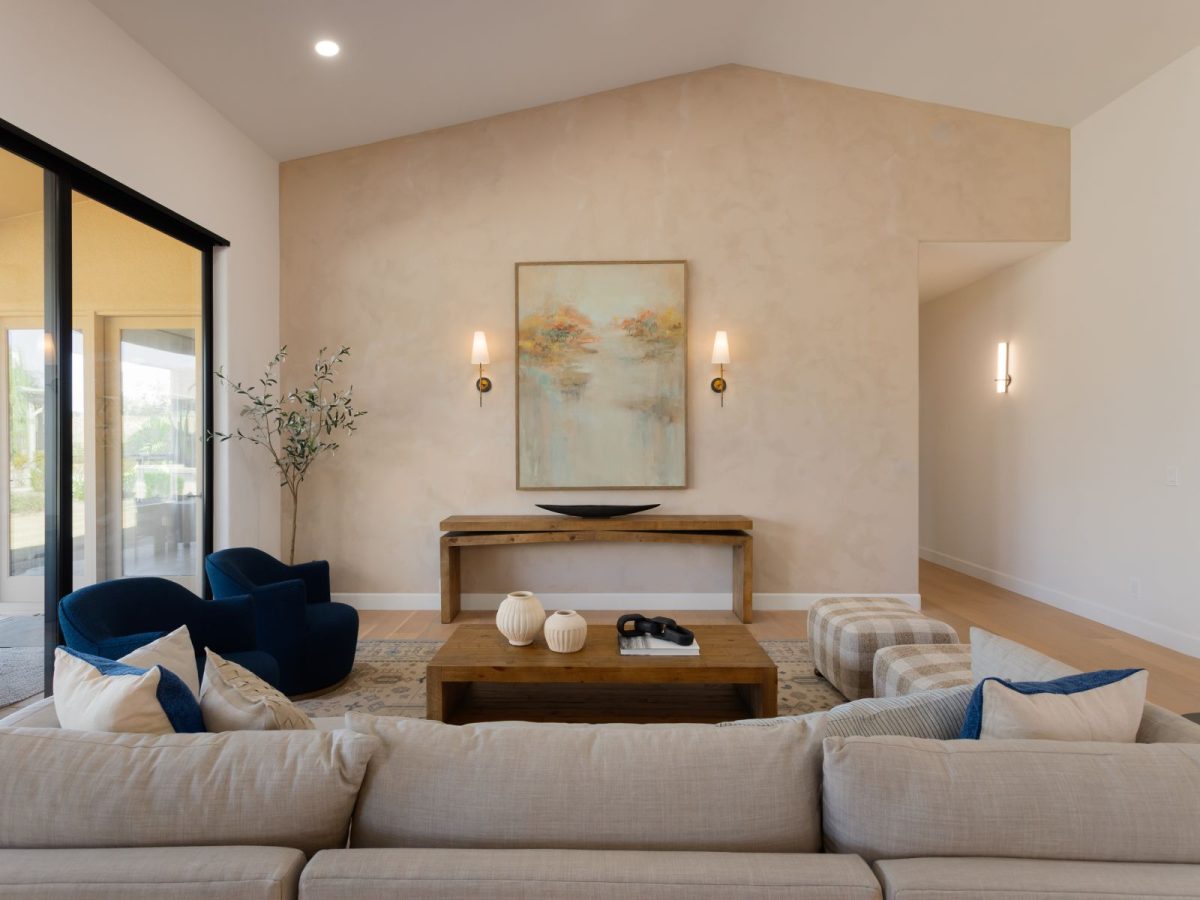
What Listing Optimization Actually Includes: The 8 Pillars
Every booking platform asks two questions about your listing: Will guests click on it? and Will guests be happy once they book it? Optimization means improving both answers. That breaks down into eight areas.
1. Photos That Sell The Stay, Not Just The Space
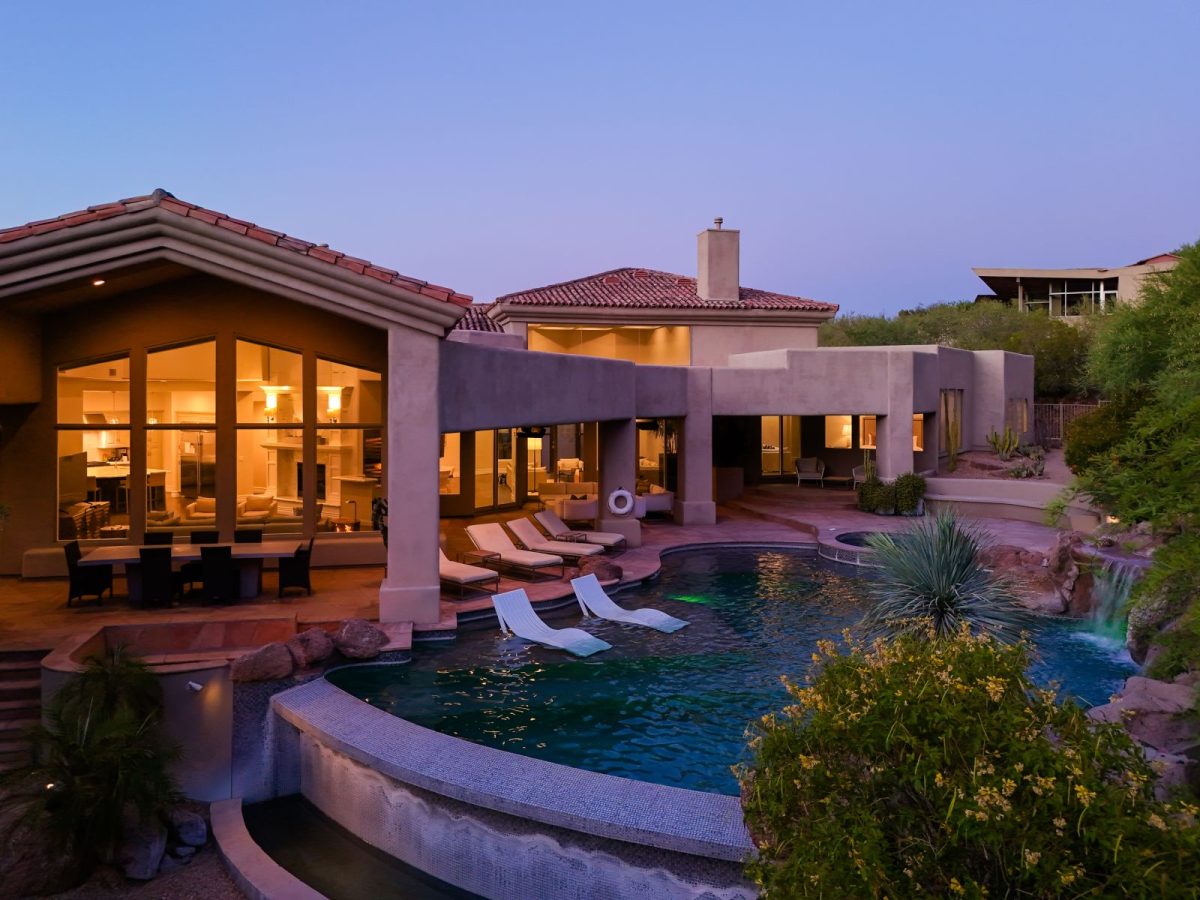
Your cover photo does most of the work in search results. It should show the single most bookable feature: the pool, the view, the game room, the styled living area. Beyond that, a strong gallery follows the guest’s path through the home, labels every room, and shows the details guests pay a premium for (hot tub at dusk, a coffee bar, a kid-friendly bunk room). Professional photography is the baseline. Photographing a well-designed space is the real advantage.
Keep in mind that platforms increasingly use AI to test photo order and cover images on their own. Every photo in your gallery should be one you would be comfortable leading with.
2. A Title That Earns The Click
Titles are short, so every word has to carry weight. Lead with your strongest differentiator, then location or proximity. Compare:
- Before: “Beautiful Home in Scottsdale”
- After: “Heated Pool + Putting Green | 5 Min to Old Town”
The second one answers “why this one?” before the guest ever opens the listing.
Platforms are also testing how titles are presented to guests. A title that matches your photos and amenities holds up no matter how the algorithm displays it.
3. A Description Written For Skimmers
Most guests read the first few lines and then scan. Open with who the home is perfect for (“Built for family reunions and golf groups of up to 12”), then use short paragraphs covering the layout, sleeping arrangements, standout amenities, and the neighborhood. Answer common guest questions up front so they book instead of messaging.
More platforms now generate AI summaries of a listing from your description and amenities. Clear, accurate details give that summary the right material to work with.
4. Amenities That Are Complete And Accurate
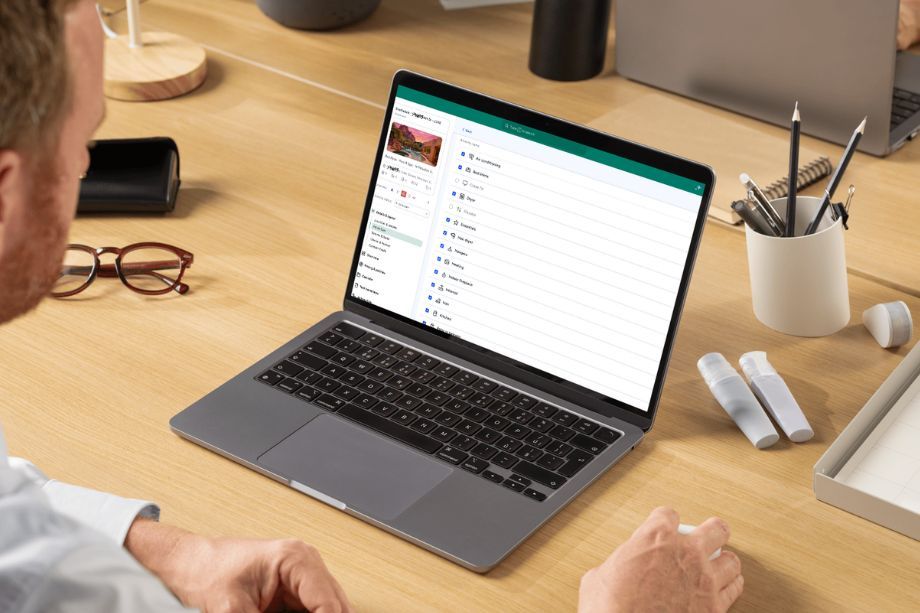
Platforms use amenities as search filters. If you have a dedicated workspace, EV charger, or crib but have not checked the box, you are invisible to guests filtering for it. Audit the amenity list on every platform at least twice a year.
5. Pricing That Moves With The Market
A static nightly rate is one of the biggest optimization gaps we see. Optimized pricing adjusts for seasonality, local events, day of week, booking lead time, and gap nights between stays. Algorithms also notice when a listing converts well, so competitive pricing can improve ranking, not just occupancy.
6. Reviews And Guest Experience
Reviews are both a ranking factor and a conversion factor. Optimization here happens off the listing page: accurate descriptions, spotless cleaning, fast issue resolution, and a smooth check-in. Responding professionally to every review, including the critical ones, shows future guests how you operate.
7. Responsiveness And Booking Settings
Response rate, response time, Instant Book, and cancellation policy all feed platform algorithms. Hosts who reply quickly and make booking frictionless tend to be rewarded with better placement.
8. Calendar Health
An open, accurate, synced calendar signals reliability. Blocking dates last minute, double bookings, and host cancellations can hurt ranking on every platform. Minimum stay rules should flex by season so you are not losing bookable nights.
Listing Optimization By Platform: Airbnb vs. Vrbo vs. Booking.com
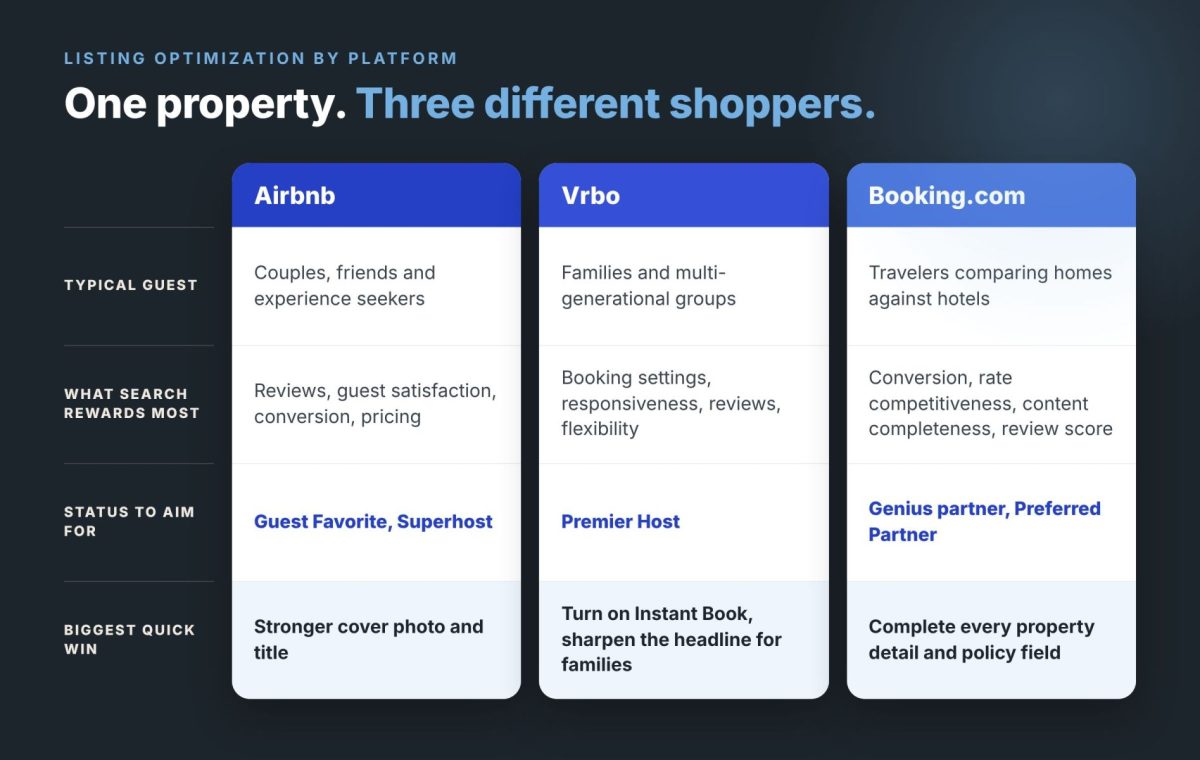
The eight pillars apply everywhere, but each platform weighs them differently and attracts a different guest. Copying one listing across all three is the most common reason owners underperform on two of them.
Airbnb Listing Optimization Example
Airbnb guests browse visually and book on emotion. The title, cover photo, and first lines of the description carry the most weight, and the Guest Favorite badge (awarded to highly rated, reliable homes) is one of the strongest visibility boosts available.
- Title: “Desert Oasis w/ Heated Pool, Firepit + Mini Golf”
- Description opener: “Spend your days poolside and your nights around the firepit under the desert stars. Sleeps 10 across 4 bedrooms, 10 minutes from Old Town.”
- Photos: Lead with the pool at golden hour. Use Airbnb’s photo tour to tag every room so guests see the sleeping setup instantly.
- Settings: Keep response time under an hour, enable Instant Book, and offer weekly and monthly discounts to capture longer stays.
Vrbo Listing Optimization Example
Vrbo leans toward families and groups booking whole homes, often further in advance. Its search gives significant weight to how easy you make the booking: Instant Book, competitive cancellation terms, fast replies, and accurate rates. Vrbo listings can also appear on Expedia and Hotels.com, so a strong Vrbo listing reaches well beyond Vrbo itself.
- Headline: “Family Pool Retreat | Bunk Room, Game Room + Fenced Yard”
- Description opener: “Room for the whole crew: 4 bedrooms plus a kids’ bunk room, a fenced backyard with a heated pool, and a game room for rainy afternoons.”
- Photos: Highlight kid-friendly and group features: the bunk room, dining table for 10, fenced yard, pool safety features.
- Settings: Turn on Instant Book, keep rates and fees accurate to avoid booking friction, and work toward Premier Host status.
Booking.com Listing Optimization Example
Booking.com guests often compare your home side by side with hotels. They expect clear, structured information and competitive rates. Its ranking favors properties that convert well, keep content complete, and offer value through programs like Genius (discounts for loyal Booking.com travelers).
- Property name: Keep it clean and descriptive, like “Desert Oasis Pool Home near Old Town” (avoid all caps and emoji, which can read as spam).
- Content: Fill in every field: room-by-room bed types, house rules, check-in instructions, parking, accessibility. Booking.com rewards completeness.
- Photos: Include clear exterior and bathroom shots. Hotel-minded guests want to know exactly what they are getting.
- Settings: Join Genius, consider mobile and early-booker rates, and keep rate parity across platforms so you do not lose ranking for being undercut.
The takeaway: one property, three listings, three strategies. Optimization means tailoring your story to how each platform’s guests actually shop.
Why Consistency Matters More Now: AI Is Reshaping Your Listing
Airbnb, Vrbo, and Booking.com are leaning harder into AI every year, and that changes what optimization means. Platforms increasingly test and “restructure” listings on their own, using only the information you have provided. That can mean reordering your photos, choosing a different cover image for certain searches, testing different versions of your title, generating summaries of your home or your reviews, or surfacing different amenities depending on what a guest searched for.
In other words, the version of your listing a guest sees may not be the exact version you built. The platform is mixing and matching your content to see what converts. That makes coherence and accuracy a ranking strategy, not just good manners:
- Every piece should stand on its own. If the algorithm leads with your third photo or pulls one line from your description, it should still tell an accurate, compelling story about the property.
- Your title, photos, description, and amenities must agree. If your title promises a heated pool, your photos should show it, your amenity list should include it, and your description should mention it. Contradictions confuse AI systems and guests alike.
- Label and caption clearly. Accurate room tags and photo captions help platforms understand your space, so their automated choices work in your favor.
- Stay truthful to the property. AI will happily amplify whatever you give it. Exaggerated claims get amplified too, and they show up later as disappointed guests and lower reviews.
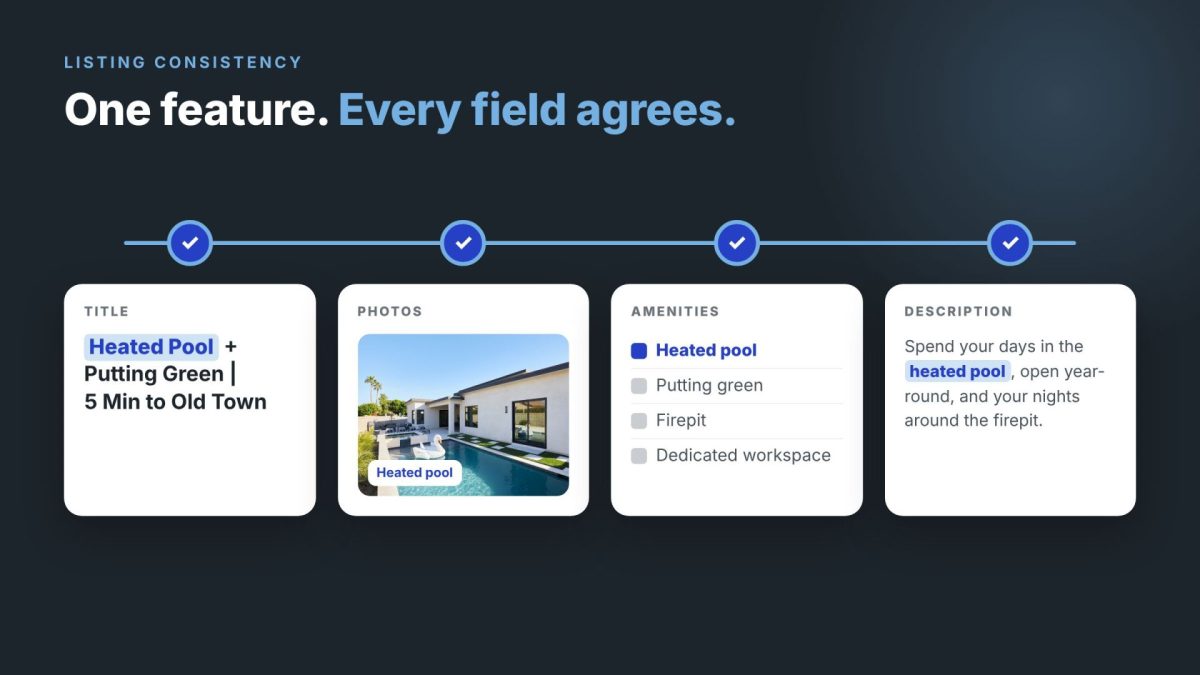
The owners who win in an AI-driven marketplace are the ones whose listings are consistent, complete, and honest across every field, because that is the raw material the algorithm has to work with.
6 Listing Optimization Mistakes STR Owners Make
- Treating it as a one-time project. Algorithms, competitors, and guest expectations change every season. A listing optimized in 2024 is not optimized today.
- Copy-pasting across platforms. The same title and description on Airbnb, Vrbo, and Booking.com means at least two of them are speaking to the wrong guest.
- Setting a price and forgetting it. Static rates leave money on the table in peak season and sit empty in the off season.
- Over-promising in photos or copy. Wide-angle tricks and “luxury” claims that the home cannot back up lead to lower reviews, which hurt ranking more than a modest listing ever would.
- Ignoring the design itself. You cannot photograph your way out of a dated or generic interior. In competitive markets, the space is the listing.
- Not measuring anything. If you are not tracking views, click-through rate, conversion, and revenue per available night, you cannot tell whether a change helped.
How GoodNight Stay Optimizes Listings For Owners
At GoodNight Stay, listing optimization is not a line item. It is built into how we manage every property, and it starts before a single photo is taken.
- Design that photographs and performs. Our in-house design team, Alpha Interiors, specializes in short-term rental interiors. They create spaces built around what guests in your market book for, so your listing has a real reason to stand out.
- Platform-specific listings. We write and maintain titles, descriptions, and photo orders optimized for Airbnb, Vrbo, and Booking.com, tuned to each audience.
- Dynamic pricing, managed daily. Rates adjust for demand, events, seasonality, and gap nights, with a human reviewing the strategy, not just software.
- Guest experience that earns five stars. Fast communication, professional cleaning, and proactive maintenance protect the reviews that drive ranking.
- Ongoing performance reviews. We track views, conversion, occupancy, and revenue, then adjust. Optimization never stops.
Thinking about buying your next STR, or selling one? Our in-house real estate team, Alpha Residential, helps owners evaluate properties based on real revenue potential, including how well a home can be optimized to perform.
Not sure if your listing is optimized or just updated? Connect with our team and we will show you where you are losing visibility and bookings, and what we could do to set up your property for success.
Frequently Asked Questions
What Does It Mean To Optimize An Airbnb Listing?
Optimizing an Airbnb listing means improving every factor that affects how often your property appears in search and how often guests book it. That includes photos, title, description, amenities, pricing, reviews, response time, booking settings, and calendar availability. It is an ongoing process, not a one-time update.
How Does Airbnb SEO Work?
Airbnb SEO refers to how Airbnb’s search algorithm decides which listings to show first. Airbnb does not publish its exact formula, but it has said that factors like quality (reviews and photos), popularity (how often guests view and book a listing), and price relative to similar homes all matter. Listings that convert well and keep guests happy tend to rise in search.
Should My Airbnb, Vrbo, And Booking.com Listings Be The Same?
No. Your core facts should match, but your titles, descriptions, and photo order should be tailored. Airbnb guests respond to experience and atmosphere, Vrbo guests are often families looking for space and group-friendly features, and Booking.com guests tend to compare homes against hotels and want clear, structured details.
How Often Should I Update My Short-Term Rental Listing?
Review your listing at least once per season, and any time you add an amenity, change your design, or notice a drop in views or bookings. Pricing should be reviewed far more often, ideally daily with dynamic pricing tools and regular human oversight.
How Do I Get More Bookings On Airbnb Without Lowering My Price?
Focus on conversion before discounting. Upgrade your cover photo and title, enable Instant Book, respond to inquiries quickly, fill gaps in your amenity list, and earn strong reviews through a consistently great stay. A well-designed space also justifies a higher rate, which is why many owners invest in STR-focused interior design before cutting prices.
