

“Is an Airbnb actually profitable, or is that just marketing?” It’s one of the most common questions we hear from prospective owners, and for good reason. The short-term rental industry has no shortage of success stories and horror stories, often about the exact same market.
Here’s the honest answer: yes, an Airbnb can be genuinely profitable, but the platform itself has almost nothing to do with it. Two owners can buy nearly identical homes on the same street and end up with completely different results. One nets six figures a year. The other barely covers the mortgage. The difference isn’t luck. It’s whether the owner treated the property like a business or like a hobby.
The Real Numbers Behind “Average” Airbnb Income
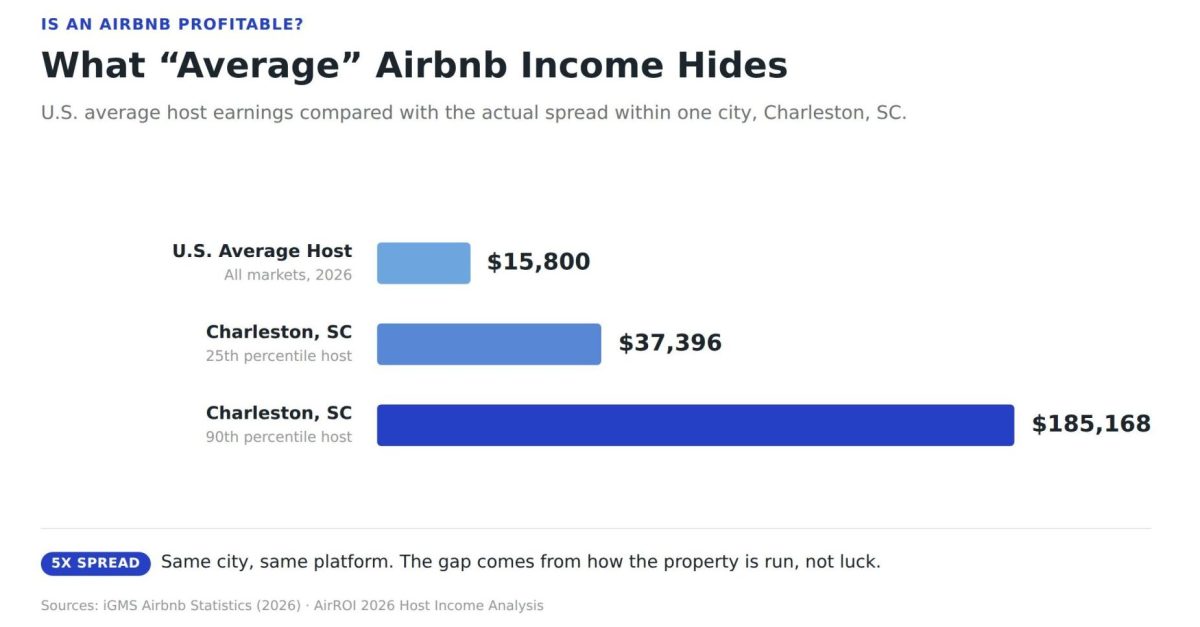
Industry data puts the average U.S. host’s annual earnings somewhere between $14,000 and $15,800, according to research from iGMS and iPropertyManagement. On its own, that number doesn’t sound like it justifies the effort of buying and running a rental property.
But “average” is doing a lot of heavy lifting in that sentence. AirROI’s 2026 host income analysis found that within a single market like Charleston, South Carolina, a host at the 90th percentile earns around $185,000 a year while a host at the 25th percentile earns closer to $37,000, a five-times spread on properties competing in the exact same city. That gap has nothing to do with Airbnb’s algorithm and everything to do with the decisions the owner made before and after the property went live.
Those decisions come down to a handful of controllable factors: location, design, pricing, market knowledge, and tax strategy. Get those right and the math works in your favor. Skip them and you’re just gambling with a mortgage payment.
Location Sets Your Ceiling Before You Even List the Property
No amount of clever marketing overcomes a bad location. AirROI’s data shows annual revenue across markets ranging from about $16,800 in lower-demand areas up to nearly $70,000 in resort and leisure markets like Sedona, Arizona and Charleston, a 4.2x variance driven almost entirely by where the property sits, not how nice it is inside.
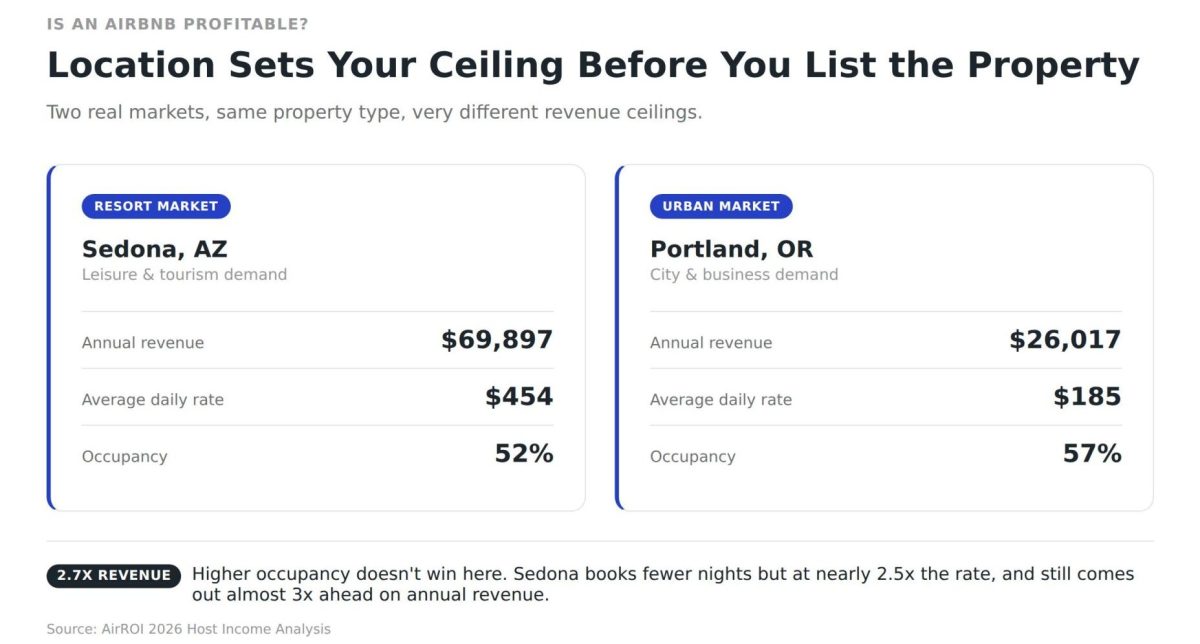
This is why property selection and market vetting is really the first profitability decision an owner makes, long before the first guest checks in. It’s also the reason our in-house real estate team, Alpha Residential, exists: finding STR-friendly locations with real booking demand is a data problem as much as it is a real estate one. A property in Scottsdale or Nashville with strong seasonal demand and reasonable acquisition costs will consistently outperform a cheaper home in a market with a shorter season or capped short-term rental permits.
Design Is a Revenue Line, Not a Decorating Choice
Once the location is right, the interior determines how much of that market demand you actually capture. This isn’t about taste. It’s about conversion.
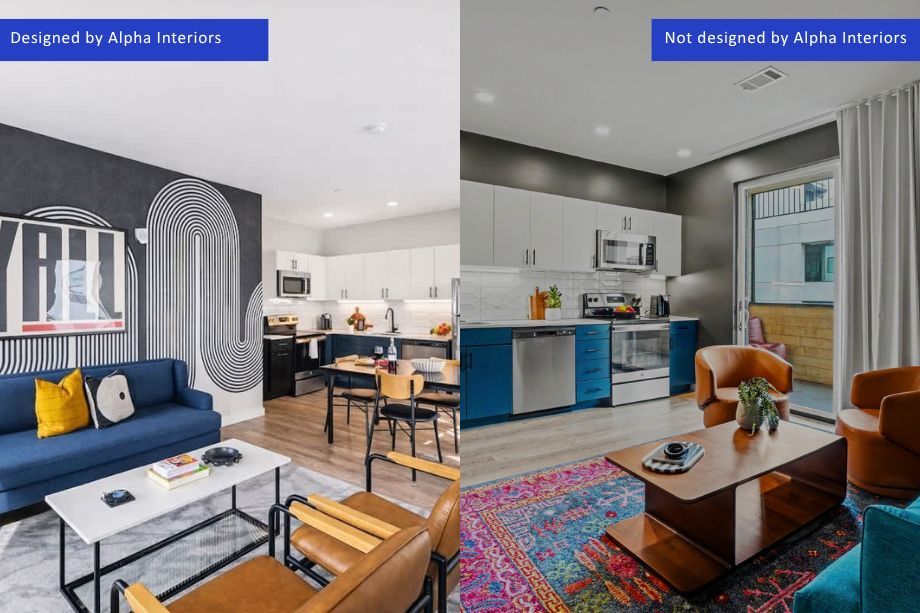
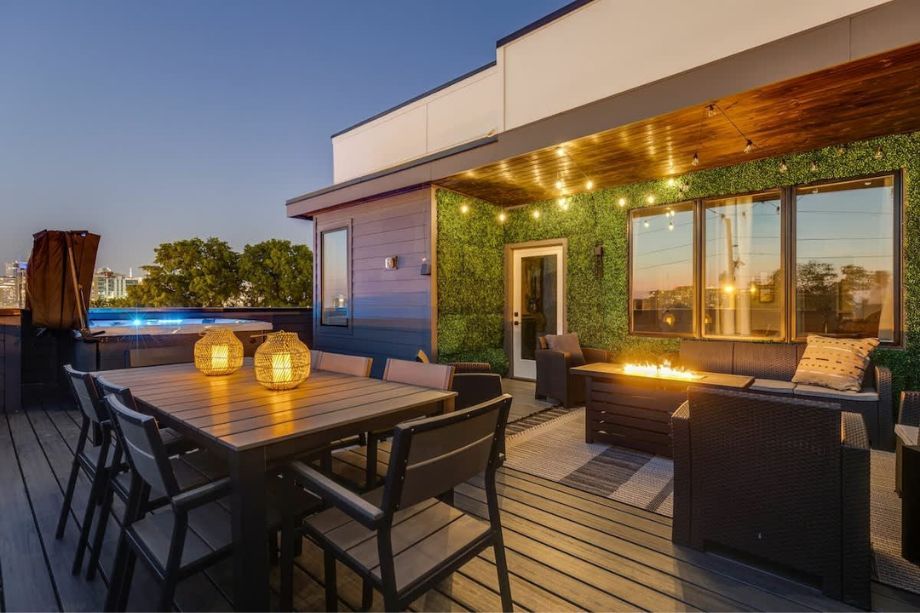
When our design team redesigns a property with guest experience and bookability in mind rather than personal style, owners see an average 25% increase in revenue. The independent data backs this up: AirROI found that a single hot tub added roughly $38,800 in annual revenue in Asheville, a 155% premium over comparable properties without one. Bedroom count matters just as much. In Charleston, a five-plus bedroom home earned over $159,000 annually, more than four times what a one-bedroom unit brought in.
Design decisions like these are why Alpha Interiors approaches every project as revenue-driven design rather than home staging, treating visual differentiation in a crowded market as a pricing lever, not just aesthetics.
Competitive, Dynamic Pricing Closes the Gap
A great property priced badly still underperforms. Short-term rental pricing isn’t a “set it once” decision the way a long-term lease is. Rates need to move with demand, seasonality, local events, and what comparable homes nearby are charging, the same dynamic pricing approach that separates owners chasing one “perfect” rate from those actually maximizing revenue.
The occupancy math matters here too. Most short-term rental properties become profitable somewhere around 50 to 60% occupancy, one of several profitability myths worth debunking for new owners. An owner chasing the highest possible nightly rate at the expense of occupancy often ends up worse off than one who prices competitively and keeps the calendar full.
Knowing Your Market Protects Your Margin

Profitability isn’t a one-time calculation you make before buying. The short-term rental industry is projected to keep growing at roughly 11% annually, and local markets shift constantly with new supply, changing regulations, and seasonal demand swings. Owners tracking Scottsdale’s current market trends going into 2026 had a very different pricing and booking strategy than owners who set a rate in 2023 and never touched it again.
This is also where a lot of self-managed owners lose money without realizing it. Without ongoing visibility into what’s happening in a specific submarket, it’s easy to leave revenue on the table or misread a slow month as a permanent decline rather than a seasonal one.
Tax Strategy Turns Paper Losses Into Real Cash Flow
Profitability on paper and profitability after taxes aren’t the same thing, and this is where a lot of owners leave money on the table simply because no one told them the rules. Short-term rentals that meet material participation requirements can qualify for accelerated and bonus depreciation, allowing owners to offset other income with rental losses in ways a typical long-term rental usually can’t, as Cherry Bekaert’s overview of short-term rental tax rules explains in more detail. This isn’t a substitute for advice from your own CPA, since eligibility depends on hours worked, ownership structure, and how the property is used, but it’s a real lever that changes the actual return on an otherwise identical property.
Professional Management Is a Multiplier, Not Just a Cost
Self-managing can produce a higher profit margin on paper, with self-managed margins running around 35 to 45% versus 25 to 35% for professionally managed properties, but that comparison misses the bigger number: total revenue. Professionally managed listings in that same data earned 23% to 104% more in gross revenue than comparable self-managed properties in the same market, largely from better pricing discipline, wider distribution across platforms, and faster response to demand shifts.
A smaller percentage of a much bigger number is often the better outcome, which is the whole idea behind full-service vacation rental management: the goal isn’t to take a cut for its own sake, it’s to grow the pie enough that the owner still comes out ahead.
So, Is It Profitable? Yes, If You Treat It Like a Business
Starting an Airbnb is profitable when an owner controls the variables that actually drive returns:
- Location: choosing a market with real, sustained booking demand
- Design: building a property guests want to book and pay a premium for
- Pricing: adjusting rates dynamically instead of setting and forgetting
- Market knowledge: tracking local trends instead of guessing
- Tax strategy: structuring ownership to capture every legal advantage available
None of these require luck. They require information and, often, time that owners with full-time jobs and families don’t have to spare. That’s the gap GoodNight Stay, Alpha Residential, and Alpha Interiors were built to close: sourcing the right property, designing it to perform, and managing it like a business day to day. If you’re weighing whether a specific property pencils out, request a free rental evaluation and we’ll walk through the real numbers with you.
